We have automatically changed the website language based on your current location. You can manually select a different language using the language selector at any time.
Translations are powered by Google Translate.
We have automatically changed the website language based on your current location. You can manually select a different language using the language selector at any time.
Translations are powered by Google Translate.
The 7th of April celebrates World Health Day. In saying that, I think we can agree that our state of health has never been more important. So, today is a good reminder to be aware of the potential impacts a dirty coffee machine could have on your health. We want to educate you around ways to avoid those. Having a coffee machine certainly has its benefits but did you know that it can have negative effects on your health when not cleaned properly?
There’s extensive research around bacteria and germs that live inside coffee machines when they we don’t clean them regularly. A study done on nine Nespresso® machines and Krups® revealed that bacteria can thrive in the coffee machines’ drip tray and spread to the rest of the machine as they multiply due the moisture. Research revealed that up to 67 variants of bacteria can be present in a machine. Among them, are a few with pathogenic properties which are of concern for the human health.
One of the common bacteria found in the coffee machines was Pseudomonas, a variant which tends to live in damp areas and can be harmful, causing infection in those with weakened immune systems. The other variant frequently found in the machines was a bacterium known as Enterococcus. It can cause urinary tract infections, certain digestive issues, and other infections in those with compromised immune systems.
Mould and yeast are also known to develop and thrive on the inside of coffee machines. Here are the results of a swab test which was done on the inside of a Nespresso® machine. The results were quite astonishing but also came as no surprise. A wet and warm environment such as the inside of a coffee machine is prone to be affected by possibly harmful germs as bacteria thrive in dark, moist places. But here is the good news, there is ways to ensure you are only drinking coffee with your next cup. Simply keep your coffee machine clean.
The simple answer to fresh coffee is regular cleaning. Frequently cleaning components such as the drip tray, and if present capsule or bean/filter basket is essential. Additionally, the machine’s internal components such as the brewing chamber, washer plate, and spout should also receive a thorough cleaning.
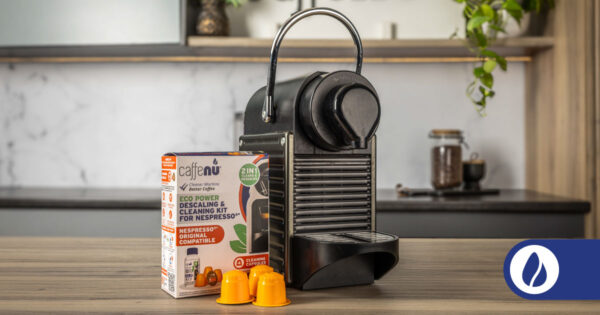
If you own a capsule coffee machine such as Nespresso®, cleaning the latter can be done with the use of a Caffenu cleaning capsule which cleans the internals of the machine and flushes out old coffee and bacteria with its unique foaming action. The drip tray and capsule basket can also be cleaned in the cleaning capsules’ solution, like this. These are vital steps to keeping your machine and its components clean.
If you have a bean to cup or commercial group machine, you can use a cleaning tablet to get into the inside of your machine.
Check out our guide below on how to clean your specific coffee machine.
Here is a guide on the most popular coffee machines and how to clean them correctly…
Take care of your health by taking care of your machine. You will definitely get satisfaction by knowing you are getting a fresh cup of coffee minus all the germs. True coffee appreciation and good health all starts with making coffee in a clean coffee machine.
Looking at Troubleshooting and Solutions for Nespresso® Coffee Machines could give you the answer to your very own Coffee Machine Problem. Because even though Nespresso® Coffee Machines are magnificent appliances, providing the convenience of brewing café quality coffee in just a few seconds, they can develop problems and issues. The quick convenience of these capsule coffee machines may one day wear out. This could have many reasons.
Let us look at some of the most common problems you might face with your Nespresso® Machine, and what the solutions to those problems are.
Let us start with the most obvious first. Please ensure the machine is properly plugged in and that the plug is fine and working. We know this happens, right? The plug may experience wear and tear if frequently unplugged, or a wire may be loosened which can obviously be a quick fix. Additionally, the machine may have automatically switched off upon turning it on. Unplug your machine and make sure that no wires are exposed. Then ensure the plug looks to be in good, standard shape (no burn marks on the prongs of the plug). Plug in and switch on again.
Make sure the water tank is filled up and placed correctly. There might also be clogging in the brewing chamber of your machine, caused by an accumulation of old coffee residue and oil. Learn how to best unclog and fix the poor flow in your Nespresso® machine.
You could preheat your cup, and you may need to descale/decalcify your machine because of limescale and calcium build-up on the machine’s element, thermo block and internal pipes. This build-up gathers due to minerals in our tap water which is used in the coffee machine’s tank. See how changing your tank’s water can benefit your machine. Through effective descaling, you can easily remove the unwanted build-up and keep your coffee hot.
We have mentioned that your machine builds up old coffee residue and oils in the brewing chamber. These build-ups are not only a cause for poor-tasting coffee but also germs multiplying in the chamber. Therefore, it is best to ensure your machine is effectively cleaned to rid your machine of germs and old coffee. Learn how effective cleaning makes way for a much-improved coffee experience.
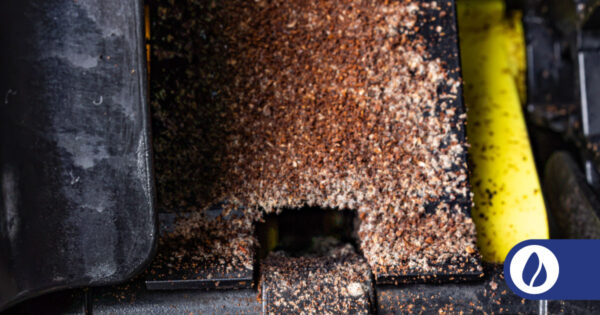
Please make sure the coffee capsule is placed correctly in the capsule holder. Additionally, the washer plate could also be blocked by the coffee residue that has built up over time, causing spurts of leakage. Have a look at the following illustration of how the washer plate accumulates coffee residue.
This could be due to the variety of coffee you are using; strong coffees such as the ristretto pour slower due to the coffee being a finer grind. Another reason could be that there is a build-up of old coffee residue and oil in the wall of your machine’s nozzle, washer plate and brewing chamber; causing a blockage that leads to the slow pour. See how much dirt and coffee residue accumulates in the brewing chamber of your coffee machine when it does not receive the thorough cleaning that it requires every now then.
The latter can be fixed with proper cleaning, using a Cleaning Capsule. The Caffenu® Cleaning Capsule has a unique cleaning agent with a foaming action that effectively works its way through and cleans the inaccessible parts of the coffee machine, allowing a better coffee pour, as well as taste.
If your machine stops after a few seconds in, it might be programmed wrong, and you need to reprogram it. In most cases, you simply hold down the button for as long as you want the machine to run for. Then next time you press the button once, it will remember this setting.
It could also be that your machine has run out of water, or the water tank is not inserted properly? Please check that as well. And lastly, it could be that your washer plate once again is blocked. Then please use a Cleaning Capsule (or even two) that can remove all the blockages in the nozzle for you, so that your coffee can pour out again like it used to.
An additional problem that should be considered lies within the milk container on the Nespresso® Lattissima®. Milk circuits build up milk blockages, which can prevent your milk from frothing as it should. This could possibly lead to machine failure.
To ensure your cappuccinos and lattes are always made to perfection, you should give your milk frother proper cleaning and maintenance.
So, these are a few common problems and solutions you might face with your Nespresso® Machine. If you need any assistance with troubleshooting your Nespresso, please contact us, we are always happy to help.
We trust that you will keep your machine in tip-top shape!
Is your Nespresso® Machine clogged, giving you poor and very slow flow? Or in general pouring coffee slower or thinner than usual? It might be that coffee is not flowing properly or even flowing at all, just slowly dripping out the machine? Or perhaps you are not happy with the amount of coffee you are getting in your cup lately?
There’s likely a reason you are not getting the same cup of coffee anymore, and it might be time to unclog your Nespresso® coffee machine. Learn how to unclog and fix poor or slow flow in Your Nespresso® coffee machine
The issue with the flow of your coffee is likely caused by a build-up of coffee oils and coffee residue. This build-ups occur in the brewing chamber, spout, nozzle and washer plate of your Nespresso® coffee machine. These components are in the front-end of your machine, gradually building up oils and residue with each cup you brew.
The build-up of sludge can severely influence the pour of your coffee, as well as the taste and smell. Further, it can easily clog the holes in your washer plate, leading to poor flow, and coffee. Therefore only dripping coffee out slowly, as less water and therefore coffee can push through the spout. Every Nespresso® machine needs a clean at least once a month due to this build-up and clogging.
To show you what goes on underneath the nice looking nozzle of your coffee machine, refer to pictures below. Really not the sort of thing you want to have in your next cup of coffee.

So, how do you unclog and clean your slowly flowing or slowly dripping coffee machine? The best way to unclog it is by using a coffee machine cleaning capsule. Using a Caffenu® Cleaning Capsule after 30 cups of coffee made or at least once a month will give your Nespresso® machine the clean it needs to function properly. And using it is as easy as making a cup of coffee.
The Caffenu® Cleaning Capsule was specifically designed to fit in your Original Line Nespresso® Machine, and give the front-end a thorough and hygienic cleaning. The capsule releases a unique and powerful cleaning agent with a foaming action. This foaming action penetrates inaccessible areas and effectively works its way through the brewing chamber, spout, and washer plate. Something that no hot water or descaling solution could do, as those lack the foaming power.
Caffenu® Cleaning Capsules unclog the washer plate, flush out all foul and hardened oils. Cleaning capsules also remove old coffee residue and bacteria from your coffee machine. Therefore, significantly improving both the flow in the pour of your coffee, as well as the taste. This also ensures that you only get the best and freshest tasting coffee with your next cup.

You simply insert the Cleaning Capsule the same way you would a coffee capsule and run your machine (watch how the old coffee pours out in video below). Once the machine has stopped, allow the remaining cleaning agent to filter through the essential components for at least a minute, then run your machine again to flush out the rest. Eject the capsule, close your lever, and run your machine with just water at least twice to flush out any remaining cleaning residue. Carry this process out after every 30 cups of coffee, or at least once a month. Please note that using a cleaning capsule is an entirely different process to descaling your machine, and we explain the difference between cleaning and descaling further below.
So, the front part of your machine builds up oils and tannins, that need removing with a cleaning capsule due to the foaming power. But every Nespresso® Machine also has a back-end, where the water tank sits with a thermo block, a heating element and other internal components such as pipes. These components are tasked with brewing and heating up your coffee. And these components can build up lime scale and mineral residue which can only be removed by a descaling solution.
Should you find that your coffee is no longer as hot as it used to be, it is likely due to a calcium and lime scale build-up on your machine’s thermo block and element. This requires decalcifying/descaling which removes the calcium and lime scale. Removing this build-up can easily be achieved with the Caffenu® Eco Descaler. The perfect Combo product to use alongside the Cleaning Capsule. However, you only need to descale every 3-6 months depending on the hardness of the water that you use.
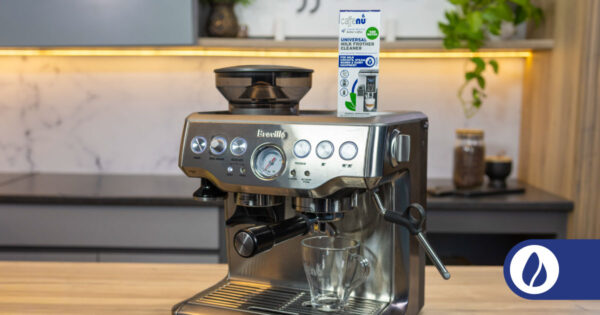
Additionally, if you have a Nespresso® Lattissima Touch or any other milk frothing container or equipment, you may also experience trouble with the milk frother or milk container not doing its job or clogged milk pipes on your machine. This is because milk frothing circuits build up milk blockages when not cleaned regularly. These circuits also require occasional cleaning to ensure effective useability. Read more about the Caffenu® Universal Coffee Machine Milk System Cleaner to find out how you can care for your milk system.
The answer to fresh tasting coffee, perfectly running and working Nespresso machines is to clean and care. Because if you take good care of your coffee machine, it will take good care of you in return! Here is to fresh coffee and a happy and clean coffee machine!

I think we can all agree, this year has not been an easy one for many. While we acknowledge all the challenges we had, we are proud that we have overcome a lot of them. This is thanks to our amazing Team, but most of all thanks to our trusted partners and customers.
Keeping your coffee machine clean has never been more important, and we are honoured to be a part of the solution, providing coffee lovers in now 52 countries world-wide with eco-friendly cleaning products to keep their coffee machines germ free and in tip-top shape.
Since attending Hostex in Johannesburg in February, we also launched our brand new product catalogue this year, and have had incredible feedback so far. To our distributors, partners, resellers and customers, we thank you for the trust in our brand, and for promoting our premium products worldwide. Your feedback this year has been overwhelming, we appreciate your support very much!
We have made a 2020 Highlight Video, happy holidays to you and your families! May 2021 bring us health, happiness, and more fresh coffee!
To all of our coffee loving customers, your feedback means the world to us! You drinking better tasting coffee is our purpose, thank you!
Bring on 2021.
The Caffenu Team
Cleaning a coffee machine can be quite daunting, as there are many different parts to these mechanical works of art. We frequently overlook the milk system of all automatic, semi-automatic, commercial espresso and household espresso machines.
The easy answer to the question is: If your machine has a part that comes into contact with milk you should be cleaning that part of the machine thoroughly to avoid bigger problems in future. Main machine categories that needs to be cleaned with a milk system cleaner are:
Milk is a wonderful and well-loved addition to coffee and can turn an ordinary espresso into a smooth, creamy Cappuccino, latte, flat white or a whole array of delicious coffee based beverages. Unfortunately, milk also has a tendency to build up milk stones, fats and also go rancid (we all know what sour milk smells like) with harmful bacteria. Because of this, you would need to clean the parts of the machine that come into contact with the milk. The main function of a milk system cleaner is to clean the parts of your coffee machine that you cannot reach (where milk will go through a pipe system or a milk circuit).
Cleaning the milk system is a vital part of ensuring the machine operates properly. Blockage in the steam nozzle or pipe can lead to many problems. The worse of which is if the anti-suction valve on the steam wand blocks and allows milk into the boiler. Fixing this error will result in costing you thousands to have your machine fixed and working properly again.
How often the system needs to be cleaned depends on how often a machine gets used. For instance, a commercial machine will need to be cleaned more often than a home-used machine. For the general part we recommend cleaning milk systems of a machine at least once a week.
General instructions for use on Automatic One Touch Milk Circuits:
General instructions for use on Steam Wands and other Dairy Equipment:
It’s easy to make a cup of coffee, but it’s just as easy to leave the used coffee build up inside the machine or coffee capsule basket and let it stay there for a while. The same goes for the coffee that builds up in the drip tray, cup after cup. Here is how you can keep bacteria at bay and your coffee machine clean.
A study done at University of Valencia in Spain found that between 35 and 67 types of bacteria were
breeding in the coffee machine’s drip trays they studied, and among them were pathogenic strains
that can make you sick. This is not a nice thought, but easy to fix, as the dirt and bacteria can be kept
away by doing a little cleaning!
To keep bacteria at bay, you should regularly empty out any removable coffee machine parts, for
example both the basket and the drip tray, as well as give them a soak and clean every now and then.
If you have a capsule coffee machine, it’s great to run a cleaning capsule through the machine, and
soak the basket and drip tray in the cleaning solution afterwards. For other types of coffee machines
it is recommended to use this cleaning powder which was specifically designed to clean your coffee
equipment and parts.
Doing so will certainly put your mind at ease once you know what goes on in those components
after some time. Treat your coffee machine right, and it will give you fresh tasting coffee without any
germs. Have a look at our guide on the best way to clean your specific coffee machine here.
The first step to amazing tasting coffee moments? A clean coffee machine. Enjoy!
Having a coffee capsule machine is great; all the assortments of coffee you can enjoy at just the press of a button, but the coffee residue build-up left behind after each brew can certainly hinder the performance, and especially the taste of your coffee.
You think your coffee machine is clean inside? We made a video to show you what can come out of your coffee machine with a proper clean using a Caffenu® Cleaning Capsule. Watch it here:
As you can see, the Caffenu® Cleaning Capsule was specifically created to cleanse your coffee capsule machine from the inside out. Murky water loaded with old coffee residue is not something we want you to end up with in your next coffee. But that is exactly what clings to the inside of your coffee capsule machine, along with bacteria and aged coffee oils. The cleaning capsule is very easy to use and hygienically flushes out all the unwanted build-up from your machine, leaving you with that crystal-clear water, ensuring your next cup of coffee is perfectly fresh, as it should always be!
So, that begs the question, when last did you give your Nespresso® capsule machine a good clean? There has never been a better time than now.
And if you have another brand or type of coffee machine, worry not, we have you covered with various cleaning capsules suitable for various capsule machines, as well as an easy guide to cleaning other popular coffee machines such as bean to cup and espresso machines. Happy cleaning, happy coffee!
The water you put through your coffee machine is more important than you think. Changing the water inside your coffee machine’s water tank can not only prevent dirty water entering the pipes of your machine, but also help to avoid stale tasting coffee.
Leaving the same water in your coffee machine’s water container for too long leads to the water going stale, in turn giving you poor-tasting coffee. Ideally, the water should be changed daily for ultimate freshness!
Tip: Only fill as much water into the tank as you will need for your next coffee. That way you can avoid wasting water, as it is recommended to rinse your tank before making your next cup of coffee.
You can also better the taste of your coffee by switching to filtered water. Using filtered water also helps to keep the build-up of lime scale inside of your machine to an absolute minimum, helping to prolong the life span of your coffee machine.
If your coffee still does not taste as good as it should, it might be time for a deep clean. We recommend using a cleaner for the brewing chamber of your machine, and a descaler for the heating element and pipes. Also remember to soak your water container, and baskets or any other removable parts on your machine regularly, for example with cleaning powder specifically designed for coffee machines.
Have a look at our guide on the best way to clean your specific coffee machine here.
The first step to amazing tasting coffee moments? A clean coffee machine. Enjoy!
Sanitize and keeping it clean, that is now more important than ever. You have probably seen this build-up at the bottom of your kettle before?
This comes from the high concentration of calcium in some of the water we use. In order to test the efficiency of sanitizing products, we took this old kettle with an impressive build-up of limescale and decided to put our Caffenu® Eco Descaler to the test!

The results were overwhelming (all the build-up stuff is gone!): a limescale-free, sanitized kettle. Now just think about this: The surface of your kettle is visible, you can actually see the build-up, but what about the inside of your coffee machine? There are places we simply can’t see, where heat and moisture are present. Those places build up that exact limescale, as well as coffee residues and bacteria.
It isn’t a fun thing to consider, but coffee machines do build up some foul mess, and that’s why it is essential to give your coffee machine a thorough cleaning every now and then, too; to avoid the potentially harmful substances that build up in your precious machine, and ensure you always get a perfect cup of coffee!
Please remember, also use a cleaning capsule on your machine (if available) or a cleaning tablet, as it is just as important as descaling. Here is a complete guide on how to clean which specific coffee machine.
Please, keep it clean!
The inside of coffee machines build up limescale and calcium deposits which sadly hinders the performance of your machine. If the heating element or thermo block are covered in limescale, the machine is unable to heat up water efficiently. Therefore, resulting in cold, bad tasting coffee and a machine that performs poorly. And really, who wants to drink cold coffee?
When coffee machines build up limescale and mineral deposits, it should be removed regularly. This is achieved by properly descaling your machine. Even though vinegar would remove some scale, please leave it for your salad. It only does half a job, and the risk of your coffee tasting like vinegar afterwards is just too high! You want to be using a proper descaling solution, like the Caffenu Eco Descaler, which has been specifically developed for the descaling of coffee machines. The descaling liquid is also eco-friendly at the same time.
Descaling with a proper solution thoroughly removes the build-up of those horrible deposits and keeps your machine running as it should, ensuring you continue to enjoy your coffee! Doing so will also prolong the life span of your coffee maker, avoiding the need to go and buy a new one.
Be aware: Certain machines have a descaling light that will inform you when your coffee machine needs to be descaled, but don’t worry if your machine doesn’t. You want to descale at least every 2-4 months depending on the water hardness in your area. Take care of your machine and it’ll take care of you!
We value your privacy. No details will be shared with external parties.