We have automatically changed the website language based on your current location. You can manually select a different language using the language selector at any time.
Translations are powered by Google Translate.

Please select your location

We have automatically changed the website language based on your current location. You can manually select a different language using the language selector at any time.
Translations are powered by Google Translate.

Select Location
australian flag Australia
austrian flag Austria
belgian flag Belgium
flag of Bulgaria Bulgaria
canada flag Canada
Denmark flag Denmark
finland flag Finland
french flag France
german flag Germany
greece flag Greece
hong kong flag Hong Kong
Image of India flag India
ireland flag Ireland
israel flag Israel
Italy flag Italy
japan flag Japan
kuwait flag Kuwait
norwegian flag Norway
oman flag Oman
Singapore flag Singapore
South Africa flag South Africa
spain flag Spain
sweden flag Sweden
switzerland flag Switzerland
Netherlands flag The Netherlands
united kingdom uk flag UK / England
usa flag United States
World globe Other

When brewing a Nespresso® coffee, you should expect to taste some sweetness, acidity, pleasing body, and, of course, freshness with a pleasant aftertaste. One thing you should not expect is a foul, bitter taste. This is not to say there isn’t any bitter profile at all; however, an overwhelming bitterness should never be welcome in a cup. So, here’s why your Nespresso® coffee is tasting bitter.

What causes the bitterness in your Nespresso® coffee?

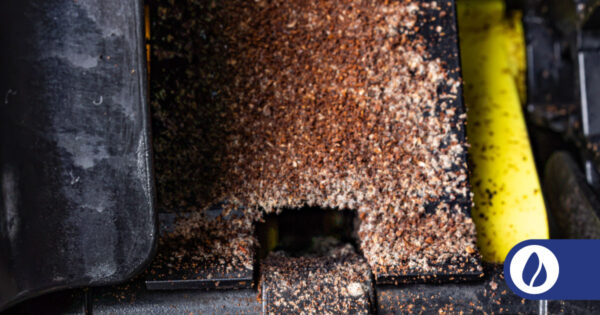
Nespresso® machines build up coffee oil residue with each coffee capsule that is brewed. These build-ups accumulate in the brewing chamber, spout, and washer plate of the machine (the front-end). The growth of bacteria due to the build-up and moisture is also possible.

The accumulation eventually ends up becoming part of your brew, giving you a bad, bitter-tasting coffee. This may cause alarm bells to sound (it rightfully should), but there is a trick: you can rid your Nespresso® machine of these build-ups.

Reclaim the perfect-tasting coffee

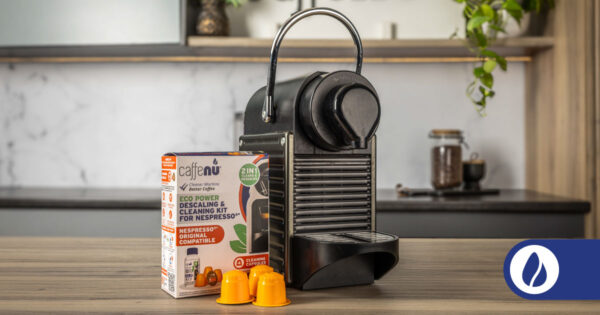
The best way to clean the front-end of your Nespresso® machine is by flushing the residue and dirt out. A thorough cleaning can be achieved with a cleaning capsule, which releases a powerful foaming agent to work through the brewing chamber, spout, and washer plate.

Using a Caffenu® cleaning capsule is as easy as using a coffee capsule, and you get to see how the cleaning capsule expels the muck which has built up in your machine (see video below). Once cleansed, you will not only have a clean, bacteria-free Nespresso® machine; most importantly, you will get to enjoy an improved coffee taste minus the foul bitterness.

Play button

Descaling & Cleaning your Nescafé® Dolce Gusto® Capsule Coffee Machine doesn’t need to be a big task. In fact it can be a rewarding experience. After you give your machine that spring clean, you will be rewarded with a hot, fresh cup of coffee. That is ultimately what you really want to get out of your coffee machine, right?

So, let’s discuss why and how you should be cleaning your Nescafé® Dolce Gusto® Capsule Machine.

Why you should clean your Nescafé® Dolce Gusto® machine

Whether you use your machine daily or only every now and then, here is a fact for you: Every time you brew a coffee, the water that is running through your machine leaves mineral and limescale residue on the heating element and piping of your coffee machine. This limescale build-up also leads to weak machine performance, and it can result in cold, bad-tasting coffee or lead to leaks and blockage which might cause damage to your machine. It can also clog the water/brewing needle which can affect the flow of your coffee and make it slow. A tip to slow down the build-up of limescale is to use filtered water in your machine’s reservoir. However even with using filtered water, there will be a time where limescale needs to be attended to.

Apart from the limescale on the inside of your Capsule Coffee machine, there is also other areas that can get dirty. Don’t forget to clean the capsule holder and your drip tray. These can all build up coffee residue that needs to be cleaned. The residue can cause bacteria and foul smells that are definitely not wanted inside your next cup of coffee.

Thankfully there is fairly easy ways to clean your machine without the need for elbow grease and industrial-grade detergents.

How do I descale and clean my Nescafé® Dolce Gusto® coffee machine?

There is two steps to keeping your machine maintained well so it can give you the best coffee and last a long time.

The first step is descaling. A descaler is key to remove limescale and mineral build-up from a coffee machine’s heating element and piping. Plus descaling also removes the residue build-up from your coffee machine’s brewing needle. Below is a quick breakdown on how to descale.

First check your machine manufacturer’s instruction manual for descaling and rinsing procedures.

  1. Pour 100 ml (single dose) of Caffenu® Eco Descaler into the water tank of your machine, with 500 ml of water to make the descaling solution.
  2. Place a large container under the brew spout and run a brewing cycle to dispense about 200 ml of the solution into container.
  3. Repeat step 2 until all the solution has been dispensed, allowing the machine to sit for 5 minutes between each cycle.
  4. Rinse the tank then fill it with clean water and repeat step 2. Once done, wipe the machine and surface around it with a damp cloth.

The second step is cleaning. Usually it is recommended to use a Cleaning Capsule for this step, but in the case of the Dolce Gusto®, the actual capsule you use serves as the brew chamber. So you only need to clean the rest of your machine which is the capsule holder and drip tray. Remove the capsule holder and drip tray and soak it in hot water with dish soap. Then give it a clean with a toothbrush and/or cloth, and rinse. Lastly, use a brush with medium-hard bristles to gently clean where the capsule holder fits in to remove the residue.

It is safe to say that you have just spring cleaned your Dolce Gusto® coffee machine. Here’s to great coffee!

Cleaning your coffee machine is vital for its lifespan, and the quality of coffee you drink. Here are the mistakes to avoid when cleaning these specific types of coffee machines.

Cleaning Coffee Capsule Machines

Avoid using vinegar when descaling a coffee capsule/pod machine, such as a Nespresso® coffee machine. Vinegar leaves a smell behind, and it doesn’t effectively remove limescale build-up. Learn about proper descaling, and how you can achieve it.

Additionally, you need to flush out your machine to clean the parts where the coffee pours out. However, a common mistake made when doing this, is only running hot water through the machine.

Flushing the machine with water doesn’t effectively remove old coffee oils and residue build-up, not to mention the bacteria. See how a Caffenu® cleaning capsule thoroughly cleans a coffee capsule machine.

Don’t forget about cleaning your machine’s capsule basket and drip tray, which also requires frequent soaking. Simply use the solution after using a cleaning capsule to soak your drip tray and capsule basket, scrub gently and rinse.

Cleaning Espresso Machines

A common mistake with cleaning espresso machines is not cleaning their parts often enough. You should flush the group head each time you brew an espresso shot, and wipe the portafilter down as soon as you can.

Avoid using steel wool or a metal sponge on steel surfaces like the steam wand and group heads. Doing this will make scratches without actually cleaning the parts. Use a gentle wipe such as microfiber.

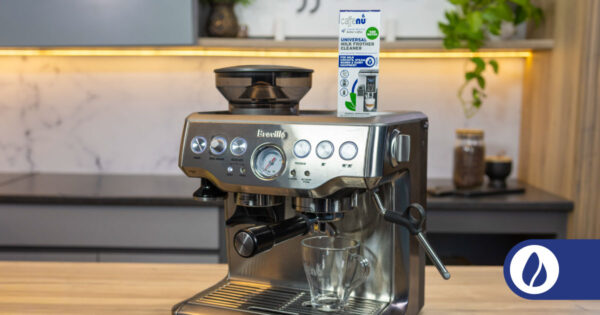
Use a fast-acting cleaning powder to remove old coffee oils & build-up from your espresso machine’s group heads & valves, great for backflush routine. Soak removable parts: portafilters, filter baskets & shower screens.

Clean your espresso machine’s steam wand, or any steam wand for that matter, with a milk system cleaner. The milk system cleaner removes all milk solid build-up, and clears blockages.

Lastly, you also need to descale your espresso machine, to remove limescale from the machines heating source. Espresso machines which have a removable watertank can use a simple liquid descaling solution.

Cleaning Filter Coffee Machines

One mistake made here is only cleaning the coffee pot/carafe. All removable parts of a filter coffee machine need to be cleaned. Clean the pot and funnel using a Caffenu® cleaning tablet.

A filter coffee machine can also be descaled, as it builds up limescale. You can use a simple liquid descaling solution that you run through your filter coffee machine every 3 months for best results.

Overall

Use the right tools to clean your coffee machine. And ensure to clean all parts of it, not just the ones you can physically see. Send us a question if we can help in any way on what the best way is to clean your coffee machine!

Learn how to clean your Keurig® K-Cup® coffee maker. As a proud owner of a K-Cup® brewer, you want to ensure that you always get the best cup of coffee from your machine. After all, there is nothing like that first cup of your favorite coffee, at the press of a button.

Maintaining the best cup of coffee requires just a bit of care and cleaning of your brewer, though. Continue reading to learn how to best clean your Keurig® K-Cup® coffee maker.

Why you need to clean your Keurig® coffee maker

Each coffee pod you brew causes coffee oil and residue to build up in the brewing chamber and nozzle of your brewer. This build-up leads to poor flow when you brew a pod, and poor coffee taste. What’s worse is that bacteria can also develop in and around your brewer.

Additionally, the heating system inside the machine also builds up limescale due to calcium and mineral deposits present in the water that is brewed. This limescale build-up causes poor machine performance, which leads to brewing cold coffee.

It should now be clear that your coffee maker does require care from time to time.

How to clean your Keurig® coffee maker

Cleaning your K-Cup® brewer doesn’t take much time or work, and can be done with one complete Caffenu® K-Cup® Maintenance Kit. The kit consists of cleaning pods and a liquid descaler.

To effectively rid your machine’s brewing chamber and nozzle of old coffee oils and bitter tannins, you must use the Caffenu® K-Cup® compatible cleaning pods.

To rid your heating element of limescale build-up, you will need the Caffenu® Eco liquid descaler. Find out how using the Caffenu® liquid descaler beats using the common household vinegar to descale.

Using the Keurig® K-Cup® compatible Cleaning Pods

RECOMMENDED USAGE: Use one cleaning pod after every 30 cups, or after making flavored beverages/tea. Use at least once a month.

Instructions for most brewers

Fill water reservoir, place large mug under brew spout.

  1. Lift handle. Insert cleaning pod in pod holder, then lower handle. Press smallest brew button or use the COCOA/OTHER button to brew.
  2. Lift handle and remove cleaning pod. CAUTION! HOT!
  3. Lower handle; wait 1 minute.
  4. Press large brew button or water brew to rinse; repeat twice.
  5. Discard solution or even better, use solution to soak drip tray for 10 minutes, then rinse off.

TIP: From time to time, it is recommended to clean the water entry and exit needles using straightened paperclip or similar object. Most effective after use of cleaning pod and before rinsing.

Instructions for Mini Ranges

Power on brewer; place large mug under brew spout.

  1. Fill 6 oz into water compartment.
  2. Lift handle. Insert cleaning pod in pod holder.
  3. Lower handle. Press brew button and wait for the cycle to complete.
  4. Lift handle and remove cleaning pod. CAUTION! HOT!
  5. To rinse, lower handle and fill water compartment to max or 10 oz.
  6. Lift handle; ensure pod holder is empty. Lower handle. Press brew button to rinse and wait for the cycle to complete. Repeat rinsing procedure twice.

*Some Mini Coffee Makers may require you to lift and lower handle first to fill water compartment.

Using the Caffenu® Eco Descaler in your Keurig® K-Cup® coffee maker

Instructions for most brewers

Important: Descale at least every 3-6 months. Do not wait for descaler light to come on.

Before descaling: • Ensure brewers are empty (no pods/cups/carafe to be inserted during procedure) • Ensure water reservoirs are empty • Remove filters (if fitted) and set aside • Disable auto off (if available).

  1. Pour entire descaler bottle and 17 oz (2 cups) of cold water into water reservoir.
  2. Place a large mug under brew spout.
  3. Press small brew button or 6 oz of hot water and repeat until “Add Water” is indicated. (Discarding mug contents into sink)
  4. Let brewer stand for at least 25 minutes (maximum 2 hours).
  5. Empty and thoroughly rinse water reservoir and refill to max fill line with fresh water.
  6. Rinse brewer by brewing small cup or 6 oz of water and repeat till tank is empty.
  7. Repeat steps 5-6 one more time. Important: You will need to open and close handle after each cycle.

After descaling: Clean the appliance. Wipe surrounding surfaces with a damp cloth.

Instructions for Mini Ranges

Important: Descale at least every 3-6 months.

Before descaling: Ensure brewers are empty (no pods/cups/carafe to be inserted during procedure.

  1. Turn on brewer.
  2. Pour about half the descaler bottle into reservoir and add water to 10 oz fill level.*
  3. Lift handle (do not insert pod); wait 5 seconds; then close handle.
  4. Place a large mug under brew spout and press brew button.
  5. Let cycle finish, discard solution from mug into sink.
  6. Repeat steps 1-4 but this time power off as it starts to dispense.
  7. Let brewer stand for at least 25 minutes (maximum 2 hours).
  8. Turn brewer back on and brew remaining solution.
  9. To rinse, carry out steps 1 – 5 with plain fresh water. Repeat at least twice.

*For B/K130 brewers: Do steps 2 and 3 in reverse order, to be able to open water reservoir lid.

After descaling: Clean the appliance. Wipe surrounding surfaces with a damp cloth.

Proper descaling and maintenance of your coffee machine is vital for its lifespan and the quality of coffee it brews. All coffee machines with water reservoirs build up limescale and calcium deposits in their heating components, like the element, thermoblock and piping. The question that remains is: What should I use for proper descaling? And can I use Vinegar to descale my Coffee Machine?

To answer this question, it is important to understand what descaling means and which build-ups you are trying to remove from your coffee machine when descaling. One such build-up is limescale.

Limescale in your coffee machine

Limescale comes from calcium and mineral deposits present in water, especially municipal water. This build-up forms on your coffee machine’s internal parts, causing weak machine performance. Colder, poorer-tasting coffee comes with that poor performance.

There is ways to minimize the amount of limescale that builds up inside your coffee machine. For example, you can consider using fresh filtered water in your machine, as it keeps the build-up to a minimum, learn more here. However, the best and only solution to preventing and especially for removing limescale, is through proper and also regular descaling.

What is descaling?

Descaling is the act of removing the above-mentioned deposits from your coffee machine, to remove limescale and rust from the internal elements and heating elements. But what you use to descale can make a big difference. We have all heard of a few ways to “descale” a coffee machine, and vinegar seems to come up a lot as a recommendation.

Can I use vinegar to descale my coffee machine?

Some articles likely mention using common household vinegar to descale, which unfortunately does not turn out to be very effective. Vinegar is very weak and mild acid which is not effective to remove limescale or rust. Plus, you run the risk of leaving a vinegar taste in your machine. Vinegar has a potent smell which can take ages to get out of the pipes of your machine. And coffee and vinegar taste is not a good combination for your next cup.

Proper descaling with lactic acid

A premium and food safe way to ensure the proper descaling of your coffee machine is using a lactic acid based descaling solution. Lactic acid is used in many detergents and soaps due to its natural antibacterial properties. Lactic acid effectively removes limescale build-up from a coffee machine’s internals, while leaving little to no residue behind. It is also very effective in the removal of rust.

Our recommendation: An eco-friendly yet effective Descaler

We recommend looking for a lactic acid based solution (not to be confused with citric acid, as it is less effective) that is good to the environment as well. Our Caffenu® Eco Liquid Descaler is an eco-friendly, phosphate-free solution that uses a food safe, high-grade lactic acid from Europe which effectively removes any build-up that may hinder the performance of your coffee machine, be it a household or commercial machine. Additional additives have been added to assist in the breakdown of the deposits. It has naturally antibacterial properties for a hygienic rinse and provides a sanitising action for all your machine’s internal components. Most importantly it has no smell and leaves zero taint or stains ensuring you get the best coffee out of your coffee machine.

Enjoy a fresh coffee, from a clean coffee machine.

Many baristas have stated that Coffee can have up to, and even more than 800 various tastes and smells. Meanwhile, wine only has about 200 different tastes and scents. The amounts contrast significantly, and it makes the topic of coffee so much more exciting.

Coffee is considered to be one of the most unique drinks discovered in our lifetime. The taste stems from all the earthly elements, including the soil, the weather. Even the altitude at which the plant grows, and of course, the plant itself. There’s also the coffee cherry and the way it is roasted.  A coffee’s taste comes all the way down to the way it is prepared, and the water used to prepare it.

Considering all factors mentioned, it is fair to say that coffee truly is a superb drink. Next to coffee, is the machine/machines we use to brew the drink. From commercial espresso machines to the capsule coffee machine used at home; one special aspect can dictate the taste of the coffee we get from the machine. Cleanliness.

Cleanliness is an important factor, in both household and commercial environments. However, it’s not easy to achieve, as it is easy to use the wrong products to “clean” with. The wrong cleaning products will not remove all old coffee oils and residues. It will simply leave you with poor-tasting coffee and a dirty machine.

Over time, Caffenu has developed products that clean, descale, degrease, and sanitise various coffee machines and equipment. Product variants have been developed for both household and commercial use and made available in cleaning capsules, liquid, powder, and tablet forms.

Each Caffenu cleaning product is carefully planned and developed to ensure that virtually any coffee machine on the market can be thoroughly cleaned. In turn, giving every coffee drinker a pleasurable coffee experience.

Caffenu® has two choices when it comes to the Nespresso® compatible Cleaning Capsule range; our Original Formula Capsule and also an Eco Formula cleaning capsule for Nespresso® coffee machines. Now you might wonder what the difference between the two is?

There are a few slight differences; the most notable difference being that the Eco Formula cleaning capsule is completely non-hazardous. Below is a list of the main differences between the Original Formula and Eco Formula cleaning capsule.

  1. Hazard Classification

As mentioned, the main difference between the Original and the Eco formulation is that the Eco Formula is completely non-hazardous. But what does this mean? Depending on the concentration of certain ingredients inside cleaning formulas, products are allocated to a certain hazard category. This is an international standard and serves to make the products safe for consumers to use. Thus, making them aware about potential hazards when using them.

The Eco formula has a very low concentration of certain ingredients hence it is classified as non-hazardous. The Original formula, however has a higher concentration of certain ingredients, it is classified as the lowest form of a Hazard, an Eye irritant Class 2. However, it’s unlikely for the product to come into contact with your eyes, as the formula is sealed inside the capsule. Furthermore, the capsule inserts directly into your coffee machine, making it a safe and convenient product to use at home.

  1. Strength

Because of the higher concentration of active ingredients, the Original formula is stronger and slightly more effective than the Eco product. However, while the Eco formula is milder, it is still very effective, especially for domestic applications and without a doubt the perfect tool to clean your Nespresso® coffee machine at home.

  1. Ingredients

As mentioned above, the Original formula is stronger. That is in part due to two main ingredients: One being sodium percarbonate – which is a non-chlorine-based, oxygen-based bleaching agent and two being sodium carbonate. These products by themselves are quite strong and both are responsible for giving the Original Formula its “Hazardous” classification. The Eco formula consists of natural and readily biodegradable materials. It also has a lower concentration of active ingredients, hence the mildness of the product.

  1. Environmental friendliness

Both products are very eco-friendly, as both use readily biodegradable surfactants, organic materials, and minerals. Neither product contains chlorine or phosphates. The Original formula contains sodium percarbonate. This ingredient must break down into the natural components it’s made from, so it takes more time to break down. Apart from the eco-friendliness of the actual ingredients, there is also a difference on the capsule form between Original and Eco. The Original capsules are 100% recyclable whereas the Eco Cleaning Capsules now come in fully compostable capsules.

Original vs Eco: The choice is yours! No matter if you choose Original or Eco, you can be sure that your coffee machine will be well looked after, giving you fresher coffee one clean at a time!

Coffee is an integral part of life! To enjoy coffee, we also need the essential coffee machine. In order to keep your coffee fresh, it is important to keep your coffee maker clean. Whether you have a semi-automatic commercial espresso machine in your coffee shop, or a capsule coffee machine at home. Here is how you can tell exactly what cleaning your coffee machine needs.

All coffee machines, household and commercial, need maintenance to ensure optimal performance, and the perfect cup of coffee. It can, however, be tiresome figuring out how to best maintain and clean your machine, especially with there being so many different machines on the market.

Let us cover some of the coffee machines, their components, and how you can clean them. The easiest is to look at the individual components that your coffee machine has, and clean those accordingly.

If your machine uses coffee capsules/pods:

Let’s start off with the capsule coffee machine. If your machine uses coffee capsules/pods, you will need to clean the brewing chamber, spout, and washer plate of the machine. This can be done by using a cleaning capsule. Using the cleaning capsule is simple yet effective.

If your machine has a water tank:

You will require a descaler to remove lime scale and calcium deposits from the internal heating components, such as the thermo block and element. The build-up of deposits occurs over time and due to the water used and can hinder the performance of your machine.

If your machine has a steam wand, milk circuit, or any additional dairy equipment:

Dairy equipment and components on coffee machines require a milk system cleaner to prevent and remove milk build-up and blockages. These blockages can eventually lead to machine failure if not attended to. Read more on why you need a milk system cleaner, and how it works.

If your coffee machine has a pre-ground filter chute (General espresso or bean to cup machines):

You will require a cleaning tablet to remove the dirty coffee oils, residues, odours, and bitter tannins that build up in brewing units, pots, and filters. Through the tablets’ cleaning and degreasing capabilities, you can effectively clean your machine, and prolong its life span.

If your machine has a group head/s (Manual and Semi-Automatic commercial espresso machines):

Espresso machines and their group heads need a concentrated cleaning powder to effectively remove old, unwanted coffee oils, odours and tannins from the group heads, lines, and valves. The powder can be used for a routine group head backflush cleaning, and to clean filters, trays, and other additional equipment.

Read ‘A guide on the most popular coffee machines and how to clean them correctly’ for a more extensive guide on how and when to clean your coffee machine. It all leads to the perfect coffee (because it’s only ever made in a clean machine).

Nespresso® machines are nifty appliances, always there to provide a quick and easy coffee. It is a give and take relationship, though. It provides the quality coffee we require, but we also need to take care of it to retain that quality. This is where descaling your machine comes in.

Caring for your Nespresso® Machine

Care comes in the form of descaling and cleaning. Descaling is crucial in removing the build-up of calcium and magnesium deposits that form limescale on the heating element and thermoblock in your machine.

Calcium and Magnesium Build-up in Nespresso® Machines

Calcium and magnesium deposits come from the minerals in your tap water. The “harder” the water, the more minerals present. Each brew with your Nespresso® machine causes the deposits to accumulate and develop limescale.

Accumulation of limescale on your machine’s heating components prevents them from heating the water to its optimal temperature, resulting in cold, poor-tasting coffee.

How often should you descale your Coffee Machine

Certain machines such as the Nespresso® Lattissima, and VertuoPlus inform you when to descale. On the Lattissima an orange light on the button will alert you, and the VertuoPlus will shine half green, half orange.

It’s okay If your machine does not alert you. Most manufacturers recommend that you descale your machine every 3-6 months to keep the heating components in tip-top condition. The recommended usage also depends on the water hardness in your area.

You can find out if your water is hard with a simple and easy DIY test. You will need a clean and clear empty bottle with a cap, and some pure liquid soap.

Fill the bottle one-third full of tap water, add a few drops of liquid soap and shake well for a few seconds. If there is a lack of foamy bubbles and the water appears cloudy and/or milky, your water is likely hard.

How to Descale your Coffee Machine

First check your machine manufacturer’s instruction manual for descaling and rinsing procedures.

  1. Pour 100 ml (single dose) of Caffenu® Descaler into the water tank of your machine, with 500 ml of water to make the descaling solution.
  2. Place a large container under the brew spout and run a brewing cycle to dispense approximately 200 ml of the solution into container.
  3. If your machine has a steam wand, then run an additional 200 ml of the solution through it, into the container.
  4. Repeat steps 2 & 3 until all the solution has been dispensed, allowing the machine to sit for 5 minutes between each cycle.
  5. Rinse the tank then fill it with clean water and repeat steps 2 & 3 with clean water. Once done, wipe the machine and surface around it with a damp cloth.

Nespresso® machines can cost a small fortune and with that comes the expectation that the machine will provide several years of great coffee. While the machine can give you a long run, how you maintain your coffee machine will determine its lifespan.

Through poor care and maintenance, a Nespresso® machine could see a lifespan of approximately only two years. By “poor care” we mean that the machine receives no cleaning and descaling at all.

Brewing a cup of coffee builds up oils and dirty residue every single time. Especially in the Nespresso® coffee machine’s brewing chamber, washer plate and spout. It therefore requires the occasional cleaning to remove hardened oils, bacteria, residue, odours and tannins.

Additionally, the heating element and thermoblock also builds up calcium and limescale deposits through regular use of your machine. Learn how the build-up of these deposits prevents the heating element from boiling your water, in turn, giving you colder coffee.

The great news is that, through proper care and maintenance, your Nespresso® machine could see a lifespan of 5-10 years. Does that not sound incredible? A prolonged lifespan of your coffee machine should be an incentive to keep it cleaned and maintained. Also, the cost of maintaining your machine costs less than replacing it.

Thankfully, taking good care of your coffee machine is not the colossal task you think it is. By running a cleaning capsule through your machine at least once a month, you can give your brewing chamber and nozzle a thorough cleaning.

Furthermore, descaling your coffee machine every 3-6 months will effectively remove the build-up of limescale and calcium, ensuring your element and thermoblock heats up as it should. By just cleaning and descaling your machine, you can ensure that it lasts.

Take good care of your machine, and it will give you many years of great coffee!

Resellers pointing at laptop

Join us

Become a reseller today

Join our worldwide network. Ask us about Reselling, private label or product development.

We value your privacy. No details will be shared with external parties.

This field is for validation purposes and should be left unchanged.
T&C