


Technician of the Year: A Day With Jacques Cilliers of Equiserve
There is a particular kind of quiet that settles over a workshop before the first call of the day comes in. Empty benches. Tools waiting in their places. And then the phone rings, and the day takes on a shape of its own.
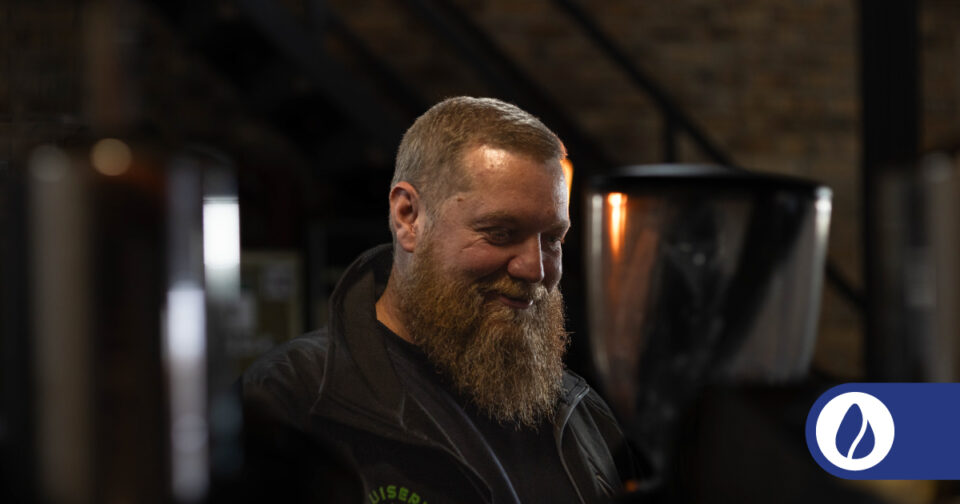
This is where we found Jacques Cilliers, Head Technician at Equiserve, on the morning we followed him for Episode 2 of the Caffenu Technician Series. A few months earlier, at the Coffee Magazine Awards in Johannesburg, Jacques had been named Technician of the Year. We wanted to know what that recognition actually meant, not as a line on an award certificate, but to a man who has spent twenty years with his hands inside other people’s machines.
He is not, by his own telling, a man given to grand statements about it.
“It’s obviously a tap on the shoulder. People don’t always see the hard work and effort, research, that goes into this whole thing. And to win the award is amazing. It’s an awesome feeling. And hopefully it’s inspiration to other technicians, younger guys in the industry.”
That’s the whole of it, really. Not a victory lap. A nod to the guys coming up behind him.
The Call That Started the Day
The job that day was a breakdown call: two La Marzocco machines, a GB5 and a PB, both with the same complaint. Steam wands leaking. A T-tap leaking alongside them. Somewhere in the mix, a possible issue with the overpressure valve, the kind of fault that needs eyes on the machine before anyone can be sure of anything.
Jacques has a way of talking through a diagnosis that makes the invisible visible.
“So from my experience, if it’s leaking on the nozzle, then it’s definitely a problem with, it’s a rubber gasket. So basically the gasket sitting at the back of the steam tap. So once we replace that, then it should be fine.”
It sounds simple when he says it. It isn’t. It’s twenty years of pattern recognition compressed into two sentences.
What Cleanliness Actually Does
Partway through the job, Jacques paused to explain something that doesn’t always make it into conversations about coffee machines: the difference cleaning and descaling actually make, not as a marketing line, but as a mechanical fact.
“Using Caffenu cleaning products on a coffee machine removes all the oil residue on the grouphead, and that prevents a bad taste to the coffee. And if there is coffee build-up on the groupheads, it basically burns onto the components and also gives a bitter taste to the espresso or the coffee.”
And on descaling:
“Descaling also helps to prevent scale build-up on the machines, and it obviously prolongs the lifespan of the machine.”
Two ordinary sentences, spoken by someone with no reason to say them except that they’re true. He sees what happens when they aren’t followed: burnt components, bitter shots, machines that die younger than they should.
From Fitter and Turner to Technician of the Year
Jacques didn’t set out to be a coffee machine technician. The trade found him sideways.
“So ja, it was always the plan. I started as a fitter and turner, and I got the opportunity to start with a group manufacturing machine parts to build dough rollers, and being in the industry, I started learning from people around me, and that’s how I became a coffee machine technician.”
Twenty years on, he’s seen enough machines to have a favourite kind of story, the ones that go wrong in ways nobody expects:
“After twenty years in the industry, I have basically seen it all. But there’s one machine that stuck with me, where the guys didn’t filter the water properly, and it actually corroded the stainless steel components in the machine.”
Water, of all things. Something nobody thinks to blame until a technician like Jacques opens the machine and shows them.
The Part Most People Never See
If there’s a thread running through everything Jacques said that day, it’s this: the work people notice is never the work that matters most.
“Most people don’t always understand how much effort and preparation, planning, the research goes into these type of things. Sometimes they feel it’s just replacing a part, but it’s to understand what’s the cause of failure and why the component failed, and why we replace it.”
That’s the difference between a technician and a parts-changer. One fixes what’s in front of him. The other asks why it broke in the first place.
He’s also quick to credit how much easier the trade has become to learn properly, compared to when he started:
“Technology changed a lot over the last couple of years, and also there’s a lot more resources. YouTube videos, parts diagrams. Manufacturers nowadays are not scared to share these type of things on their websites as well. So I think it makes it a lot easier for the technicians nowadays.”
What He Actually Checks
Ask Jacques what a good service visit looks like, and the answer is refreshingly unglamorous:
“It’s important to do a quick overall assessment, open the machine, check if there is scale build-up, check the pressures, check if there’s leaks on the machine, but also cleanliness. I think that also plays a big role in the condition of the machine and how they look after their machines.”
No mystery to it. Just the discipline of checking the same things, properly, every time.
Why This Matters Beyond One Workshop
A machine that runs well for years isn’t an accident. It’s the result of people like Jacques doing quiet, unglamorous work, backed by routines that actually get followed, cleaning, descaling, proper assessment, rather than skipped when things seem fine. Caffenu exists to support that same routine. The technicians are the ones who make it real, one call-out at a time.
Frequently Asked Questions
 Who is Jacques Cilliers?
Jacques Cilliers is the Head Technician at Equiserve, a coffee machine servicing company based in Cape Town, South Africa, with twenty years of experience in the trade.
What award did Jacques Cilliers win?
Jacques Cilliers was named Technician of the Year at the Coffee Magazine Awards, held in Johannesburg.
What is the Caffenu Technician Series?
The Caffenu Technician Series is a documentary-style video series produced by Caffenu, profiling the technicians who maintain and repair commercial coffee machines.
Why does cleaning a coffee machine matter?
According to Jacques Cilliers, cleaning removes oil residue from the grouphead that would otherwise cause a bitter taste, while descaling prevents scale build-up and prolongs the machine’s lifespan.
Where is Equiserve based?
Equiserve is based in Cape Town, South Africa.


Popular Blogs


